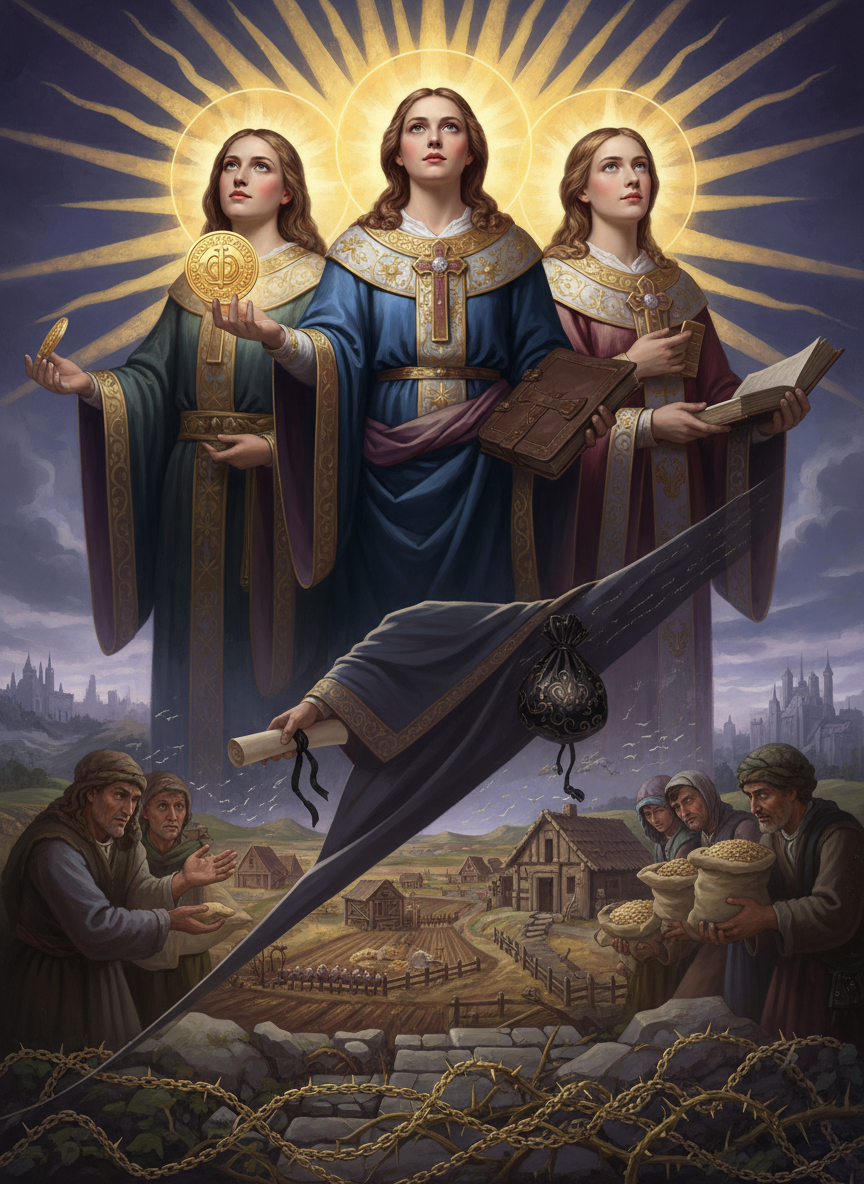
The Luminaries originated on the intricate clockwork plane of Mechanus, a realm where perfect order was maintained by a siphoned divine essence. This vital energy source was interpreted by their people as a celestial being, a willing goddess they named Seraphel, whose profound sacrifice illuminated their entire world. For generations, their society flourished under this perceived divine benevolence, meticulously ordered and driven by mechanical precision. Their entire existence revolved around the consistent flow of Seraphel's light.
The tranquil existence of Mechanus was shattered by a cataclysmic event when Seraphel abruptly disappeared, having in reality escaped to the distant world of Coia. This sudden departure extinguished the Luminaries' divine light source, coinciding tragically with the rapid decay of Mechanus following the destruction of the Bukhara Spire Gateways. Blaming the loss of their revered goddess for the swift ruin of their once-perfect home, the Luminaries resolved upon a great exodus. This desperate journey became a holy pilgrimage across planes, dedicated to finding their lost deity and bringing her back to restore their shattered world.
On 15 August 1, the Luminaries formally established themselves as a coherent faction upon their arrival on Coia. As new arrivals to this unfamiliar world, they quickly began to establish colonial enclaves strategically located near established centers of commerce and political power. Their primary objective remained the sacred quest to locate Seraphel and compel her return to Mechanus.
The Luminaries are now actively expanding their influence across Coia through a dual strategy. They engage in widespread proselytizing, spreading their unique theology and the story of their lost goddess to the inhabitants of their new home. Concurrently, they employ predatory financial agreements, leveraging their significant inherited wealth to gain a strong foothold and accrue further power within Coian society.