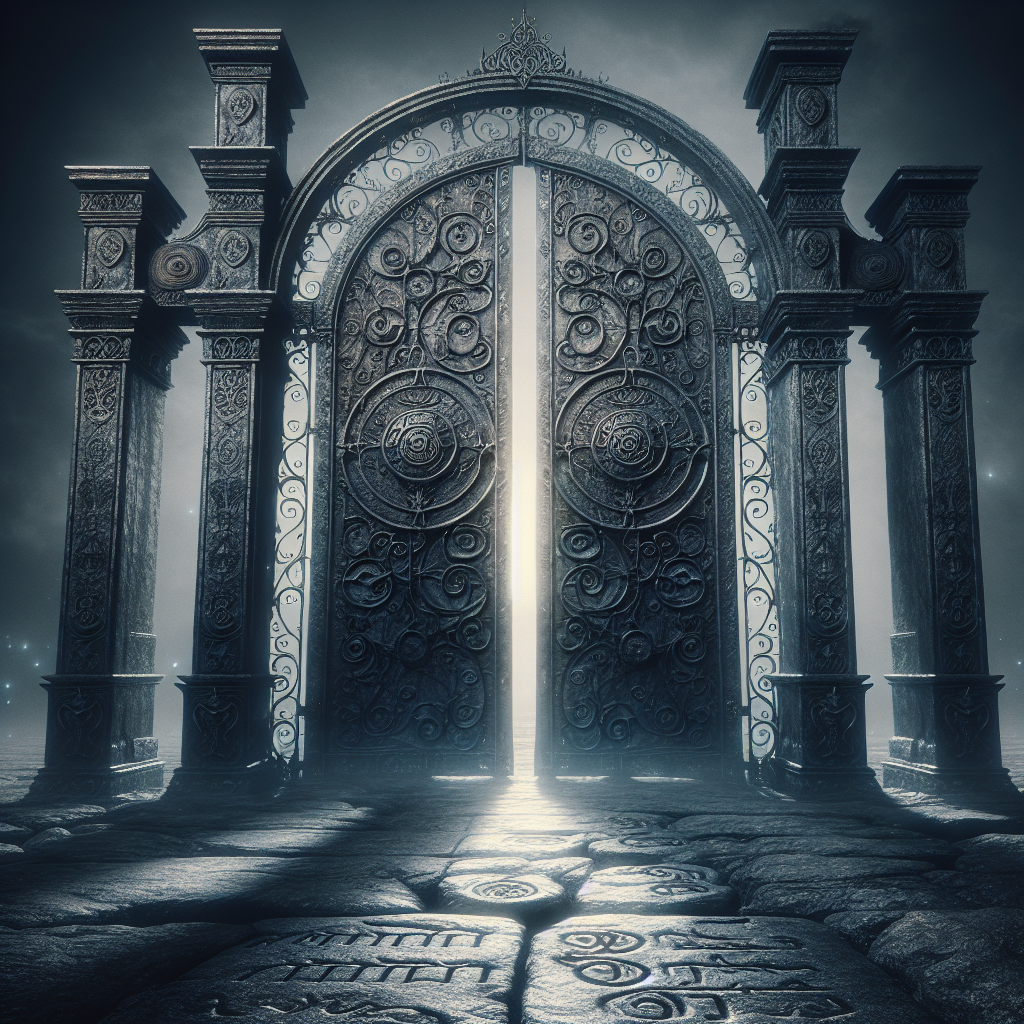
The Bleak Gate stands as a haunting reminder of the once vibrant Hausa Village, originally built in 1942 to welcome affluent guests to Elias Malkuth's utopian retreat. This grand entrance, embellished with intricate carvings symbolizing hope and unity, witnessed countless joyful gatherings, serving as a threshold between the idyllic world of prosperity and the deeper, darker depths of human experience. However, the joy was short-lived, as tragedy soon descended upon the village.
As Malkuth's descent into dark occult practices became apparent, the villagers’ dreams of harmony turned into a nightmare that led to the village's demise. Rituals intended to invoke prosperity instead summoned chaos, transforming what was once a lively community into a desolate ghost town. The vibrant colors of Hausa Village faded into somber shades, leaving the gate to languish as a relic of lost grandeur enveloped in an atmosphere of despair.
In the years that followed, the Bleak Gate morphed from a symbolic entrance of hope to a grim reminder of what was lost. Eerie lights flicker through its arches at night, believed to be remnants of unfinished rituals, adding to the lore of ghostly guardians said to protect the threshold. These flickering apparitions not only conjure images of the village’s tragic end but also resonate with an unyielding spirit that seeks to preserve the fading memories of the Hausa Village.
As time moved on, whispers of Malkuth's dark practices and the disappearance of the community intertwined with the stories of those lost souls who once thrived in the embrace of the Bleak Gate. Today, it stands both as a monument to past aspirations and a solemn reminder of the consequences of unchecked ambition. The haunting atmosphere invites wanderers who seek to uncover the mysteries of a place where hope met its untimely demise.