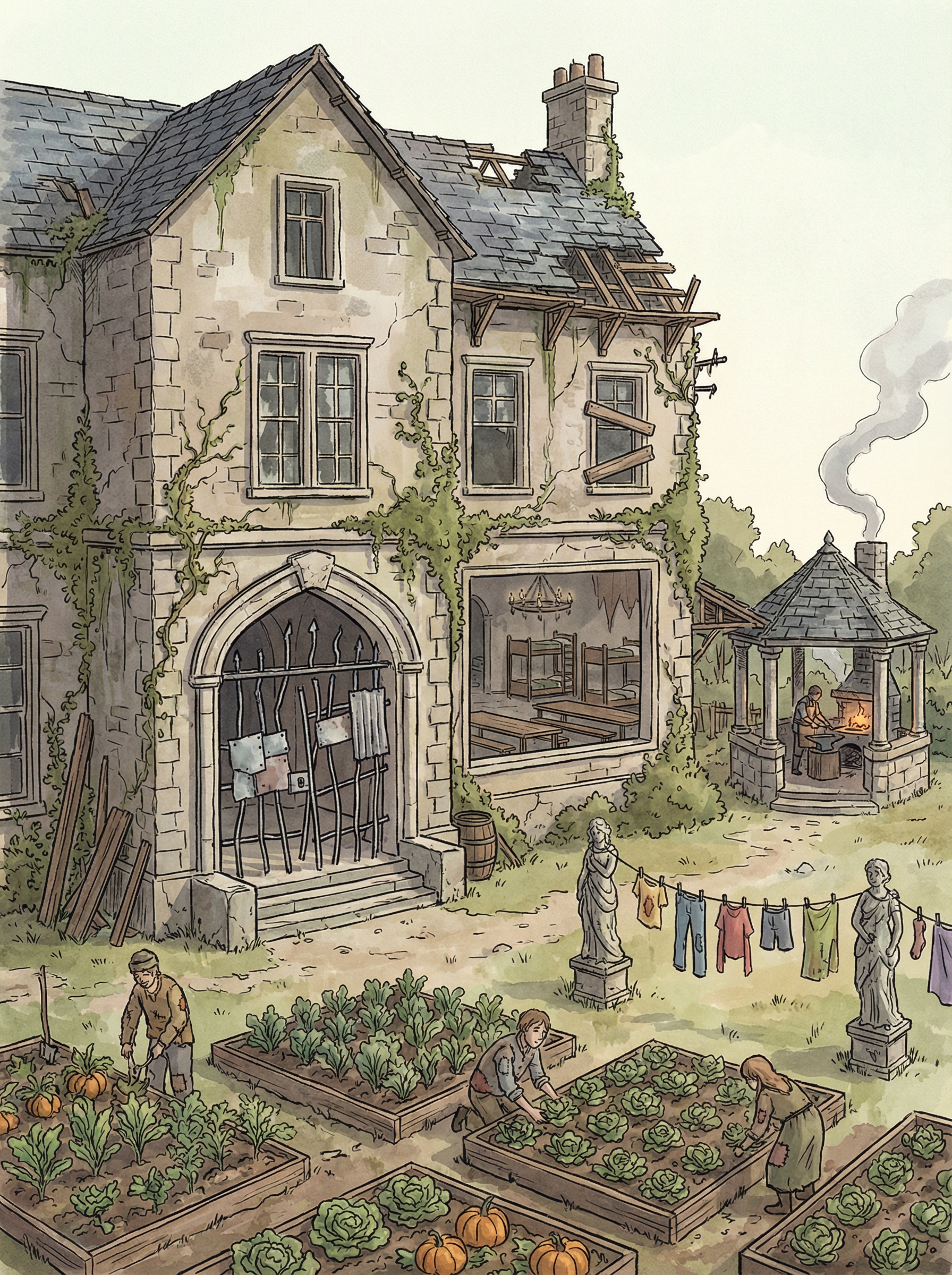
The Gilded Commons, originally known as The Lord's Home, was founded in an unknown era following the peace of the Shadow War. For centuries, this sprawling estate served as the ancestral seat of Lord Valerius Porphyry, a minor noble known for his eccentricity. It stood as an undeniable symbol of exclusive wealth, its grand iron gates marking the boundaries of privilege and power.
However, the devastating Night of Shattering in 1237 marked a turning point for Lord Valerius. Witnessing the inaction of the aristocracy during widespread dragon attacks, he became deeply disillusioned with the cutthroat politics of the noble houses. He grew increasingly frustrated with the disregard shown for the plight of the common folk.
In a radical act of defiance against the very system he was born into, Valerius formally dissolved his House's charter in 1245. He famously cast the estate's grand iron gates into the river, symbolically breaking ties with the old order. With this profound gesture, he declared the estate The Gilded Commons, a sanctuary where no title held power and honest labor was the only true currency.
Upon Valerius's passing in early 1248, he solidified his vision by leaving the estate's deed directly to the populace. This unprecedented act created an immediate legal nightmare for the regional lords, who struggled to comprehend or control the new arrangement. For the displaced and downtrodden, however, it became a cherished haven.
The Gilded Commons has since flourished as a unique sister settlement to the nearby chaotic artistic hub of Westcheap. While Westcheap embraces bohemian art and free expression, The Gilded Commons focuses intently on agrarian survival and communal living. Here, a former knight might peel potatoes alongside a goblin refugee, embodying the estate's founding principles.
All major decisions are made by a nightly assembly known as the Supper Vote, a raucous yet democratic process. Today, The Gilded Commons stands as a bustling, often overcrowded, but fiercely independent community. It remains a vibrant testament to Lord Valerius's radical dream of a society where worth is measured by contribution, not by birthright.