The Psalm Market: A History
Founded: Unknown (Post-Civil War Era) Abandoned: Unknown
In the chaotic aftermath of the Civil War, the Psalm Market emerged as a direct counter-reaction to the anarchic brutality of the nearby Freehold of Bone. While the Bone Barons embraced the silence of death and the cold trade of marrow, the founders of the Market, a sect known as The Sanctuary of the Word, held a different conviction.
They believed that the Spire's corruption and extra-planar incursions were terrifying manifestations of a cosmic Silence. To combat this looming threat, the Sanctuary established a theocratic enclave dedicated to the constant generation of sound, song, and prayer, filling the air with their sacred cacophony.
The core teaching of The Sanctuary of the Word states that so long as the air vibrates with joyous noise and holy scripture, the lingering shadows of the Bukhara Spire Gateways cannot manifest. This belief formed the foundation of what began as a genuine refuge for those seeking solace from the encroaching quiet.
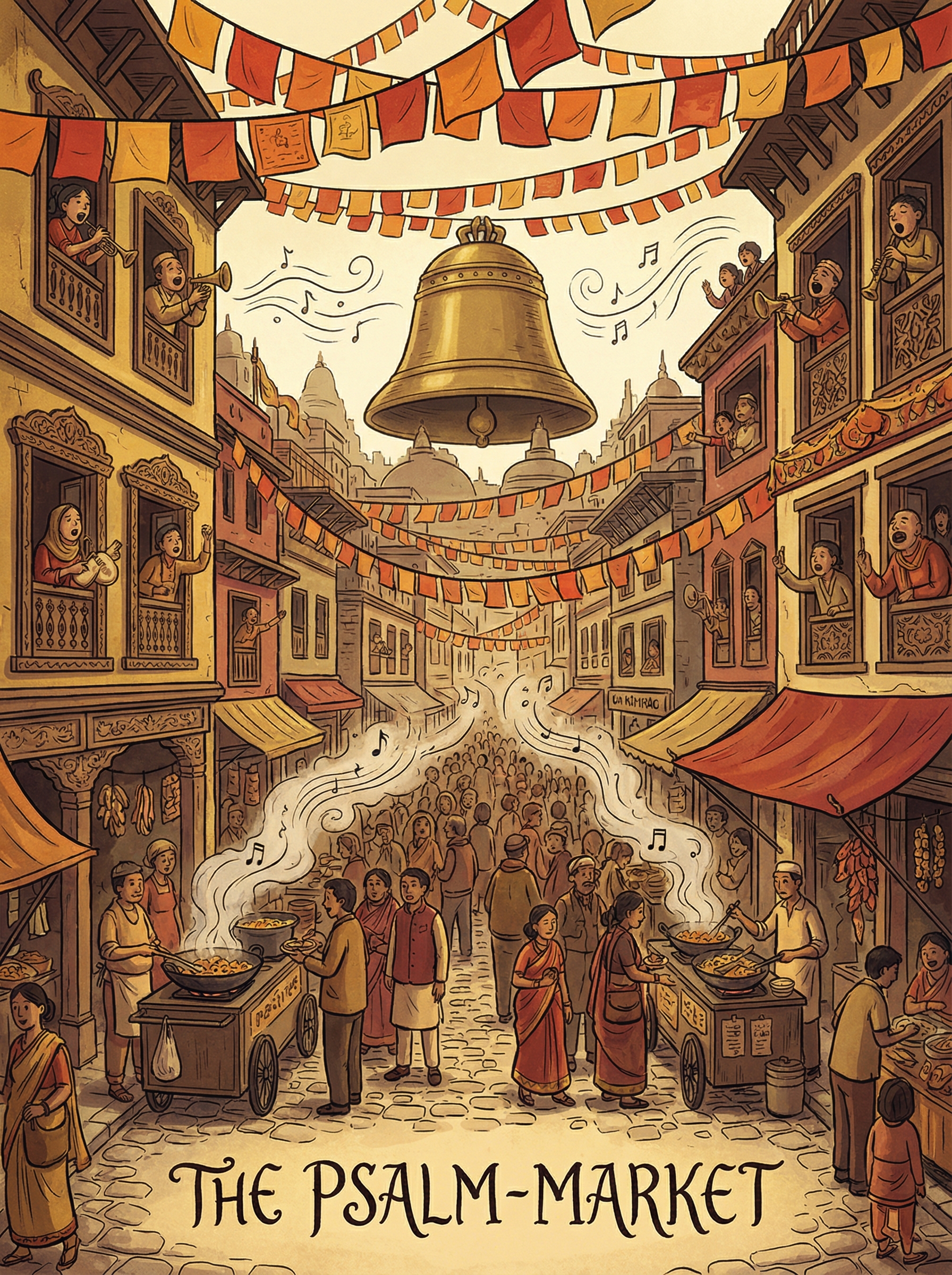
Over time, this genuine refuge calcified into a fanatical, dogmatic regime. The very joy that once drew people in became mandatory, enforced through strict laws and pervasive religious doctrine. Vibrant flags are now legally required to obscure the silent sky, blocking out any visual reminder of the cosmic void.
Street food stalls, once simple vendors, are now heavily subsidized by the church, serving a crucial purpose beyond sustenance. By keeping mouths full and moving, they contribute to the constant generation of sound and prevent any lulls in the mandated jubilation.
When the Dragonbone Vanguard successfully destroyed the gateways, it should have eased the profound fears of the Market's populace. However, the High Cantors interpreted this monumental victory in an unexpected way, effectively doubling down on their extreme beliefs.
They claimed that their relentless cacophony was the true, unseen force that aided the Vanguard's efforts. The High Cantors now assert that any cessation of music, even for a moment, would immediately invite a new, quieter apocalypse, far more insidious than the last.
Today, the Psalm Market stands as a manically thriving beacon of enforced jubilation. Its streets resonate with ceaseless sound, a testament to a society trapped in its own desperate, joyful noise.