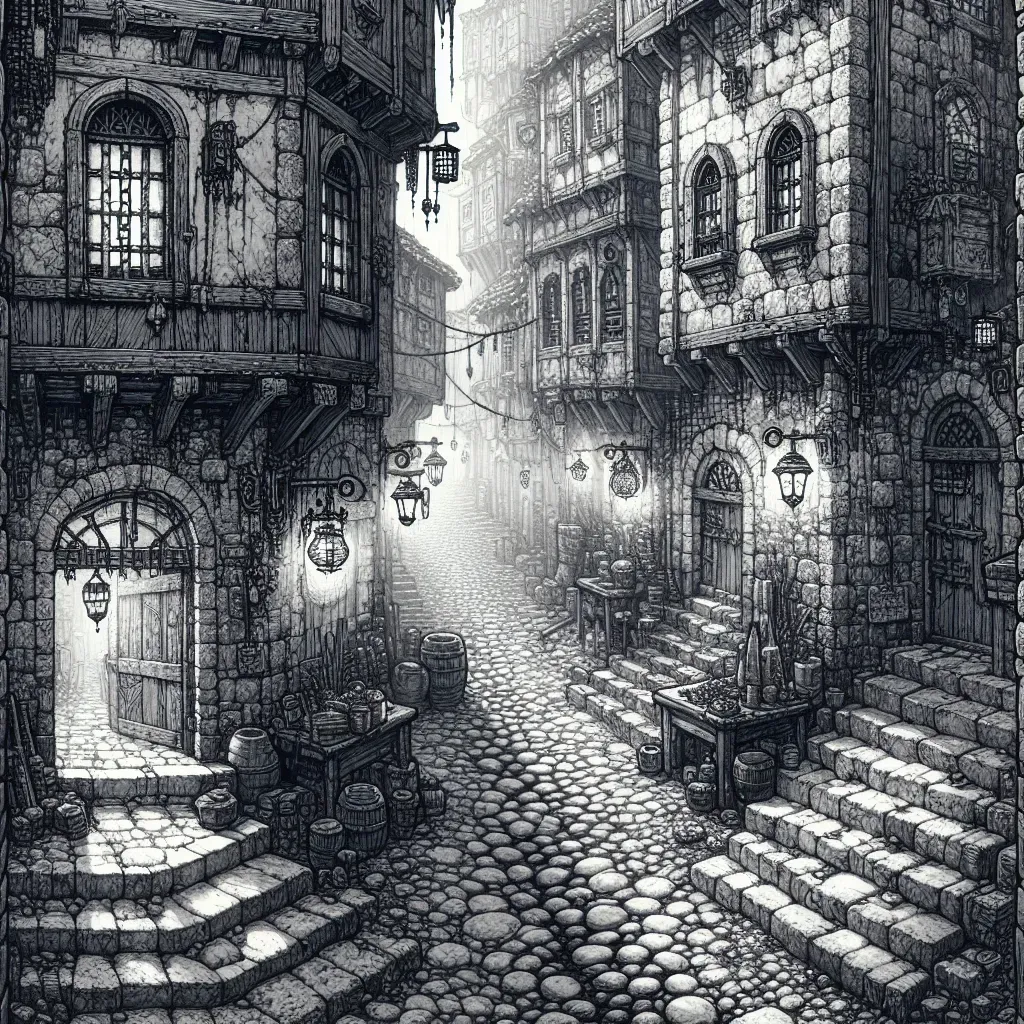
Founded on 11 June 33, The Streets of Low originally burgeoned as a center of commerce and community, attracting tradespeople and families alike with its vibrant marketplaces and lively atmosphere. However, as time marched on, the once-prosperous district began to fall prey to the shifting tides of economic power, particularly with the ascendance of the House of Silk. This influential merchant guild siphoned wealth from the wider populace, concentrating riches among a select few, leading to the gradual decline of the area.
As the affluent merchants thrived, the everyday residents of The Streets of Low faced increasing poverty and desperation. The once-bustling streets echoed with the laughter of children and the clamor of traders only to be replaced by an oppressive silence. It was during this dark transformation that Rueside emerged—a stark reminder of human suffering, constructed through the labor of enslaved individuals, many of whom hailed from the very district that now lay in ruin. Their toil adds an additional layer of tragedy to the narrative of The Streets of Low, marking it not only as a place of decline but also as a site of deep societal wounds.
Yet, hidden amidst the remnants of grandeur, the cobbled pathways and abandoned structures serve as silent storytellers. They whisper of lost fortunes, insidious plots, and tragic romances—the complex interplay of lives that once flourished but have since been obscured by time. Adventurers daring enough to traverse these forgotten paths may uncover the intricate tapestry of the past, revealing tales that intertwine sorrow and intrigue within the district's shadows.
In this modern era, as the city grapples with its tarnished legacy, The Streets of Low stands as a testament to both resilience and decay. Those who seek to unearth the stories long buried within its cobblestones not only confront the echoes of history but also engage with the city’s ongoing journey toward healing and renewal. What remains is a labyrinth of narratives that invites exploration and reflection, challenging perceptions of what a once-thriving hub can teach about the complexities of prosperity, loss, and ultimately, redemption.